EN
EN

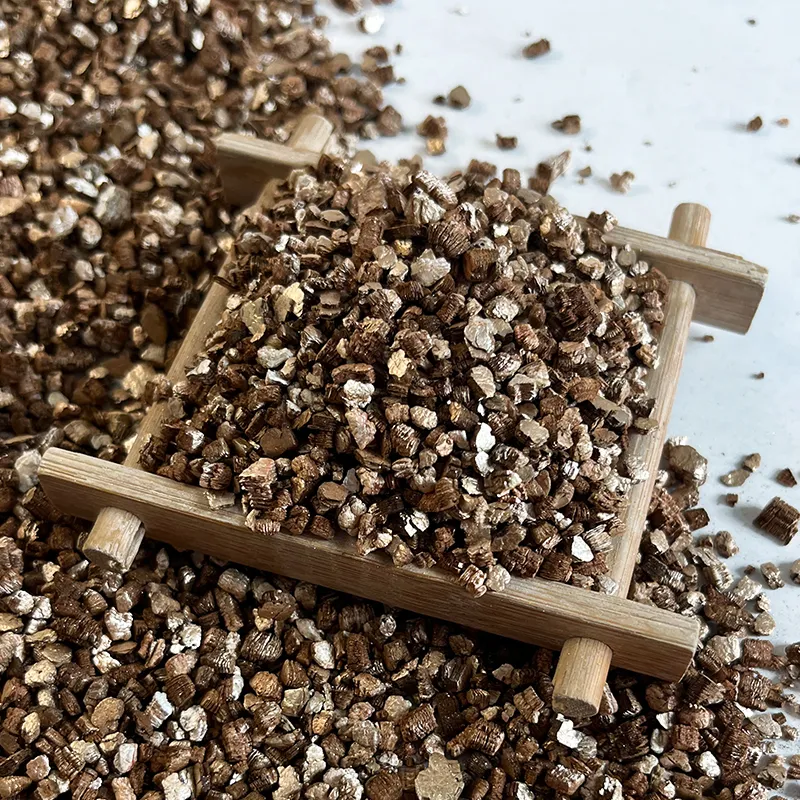
Basic Definition and Production Process
Horticultural vermiculite is a natural layered silicate mineral that, after being subjected to a high temperature, expands and becomes a lightweight and porous medium. Because of sudden and rapid heating, interlayered moisture becomes steam and causes a rapid expansion of the layers resulting in a volumetric increase of 10 to 25 times. This alteration makes vermiculite exhibit the unique expansion and proprietary properties. Manufacturing this expansion must be done with great care and expertise. This includes controlled particle size, low impurity content, and a homogeneous vermiculite suitable for the intended horticultural purpose. Guangchengze uses standardized manufacturing to produce high-quality expanded vermiculite with controlled expansion and moisture content. I have visited this manufacturer and was impressed by the detail, care and pride devoted to each individual item from raw materials to finished product.
Key Physical and Chemical Properties
Horticultural grade vermiculite is neutral to slightly alkaline and able to absorb 5 to 8 times its weight in water, and it is able to provide long-term stable moisture to plant roots. This makes it ideal for moisture loving plants in need of consistent moisture and are sensitive to overwatering such as ferns and hostas. The porous structure also allows for good moisture and nutrient retention while reducing moisture and nutrient leaching, so added fertilizer is available to plants and not lost to leaching. Vermiculite also provides robust plant growth promoting trace elements such as potassium, calcium, and magnesium and eliminates the need for supplemental fertilization. Added benefits are lightweight, non-toxicity, and odorless while vermiculite is resistant to compaction which supports long term soil structure. Vermiculite's properties have been evaluated and confirmed by reputable mineral and horticultural research authorities, making vermiculite valuable for the cultivation of seedlings and sensitive plants.
Functions in Planting Systems Vermiculite is one of the multiple critical raw materials in the field of horticulture
Its versatility allows it to be employed in various ways. Vermiculite maintains a moist yet gas-exchange permeable medium for improved plant seed germination, enabling a far greater germination rate of seedlings which not only improves seedling uniformity but is a huge advancement for commercial nurseries where consistency in healthy seedlings is critical. With regard to the propagation of plant cuttings, it maintains the desired humidity around the root-bearing wounds to speed the positive survival rate which is critical for the majority of the tougher plants to root like rose bushes and hydrangeas. As a soil-elaborating material, in the sandy soils it improves the retention of the water , while in the clay soils it reduces the overall compaction of the soil thus providing a balance to the soil of good aeration and sufficient moisture. In soilless and container cultivation, vermiculite improves root zone stability and reduces the needed frequency of watering and reduces the management pressure. The majority of professional greenhouses use vermiculite and it is always one of the main ingredients in any of the seedling mix.
Being informed about the differences between vermiculite and perlite can help improve gardening skills and the health of plants
It can also help answer questions newbies to gardening may ask as they may not know the role each plays in the planting process. Each medium serves a purpose that depends on the overall conditions and type of plants being used in the process. Since vermiculite excels in moisture retention and holds nutrients longer, it is optimal to use in moisture loving plants (e.g. seedlings). For moisture averse plants (e.g. succulents), perlite is preferred as it leads to faster drainage and may be the better exclusive medium. A blend of vermiculite and perlite is still optimal when balanced moisture retention and drainage is desired. Using these classes of media also improves the likelihood of a successful gardening venture.
The characteristics of vermiculite make it applicable in various planting scenarios
This material is great for vegetable and flower seedling raising at commercial nurseries. Seedlings are neat and strong, and ready for transplanting. Applying vermiculite for indoor potted plants help in maintenance of frequency of watering, and prevents rot at the roots, for those with busy schedules. In roof greening and light substrate projects, the lightweight nature of vermiculite is helpful as it reduces load but also meets the growing needs, making it safe and effective for these projects. Using high-quality vermiculite that is horticultural-grade with a consistent particle size is highly recommended. The contrary is true when using high quality vermiculite, such as the one from Guangchengze, as it improved the seedling survival.
Stable Supply and Customized Solutions Guangchengze has been appropriately engaged in the production and international marketing of horticultural vermiculite
With matured production technology and a holistic quality control system, the company serves its nursery, landscaping, and retail customers with all the needed varying particle sizes and packaging. Fine vermiculite for seedlings and coarse vermiculite for soil amendments are all in their product line. Due to Guangchengze's efficiency in logistics coupled with the professionalism of their team, stable product supply and quality are guaranteed, giving their global partners trustworthy solutions to the horticultural medium. With customization in particle sizes and packaging, the global supply chain of vermiculite guarantees pods of all sizes and quality to serve the customers effectively.
Table of Contents
- Basic Definition and Production Process
- Key Physical and Chemical Properties
- Functions in Planting Systems Vermiculite is one of the multiple critical raw materials in the field of horticulture
- Being informed about the differences between vermiculite and perlite can help improve gardening skills and the health of plants
- The characteristics of vermiculite make it applicable in various planting scenarios
- Stable Supply and Customized Solutions Guangchengze has been appropriately engaged in the production and international marketing of horticultural vermiculite