EN
EN
Supply Chain Integrity and Gravel Quality
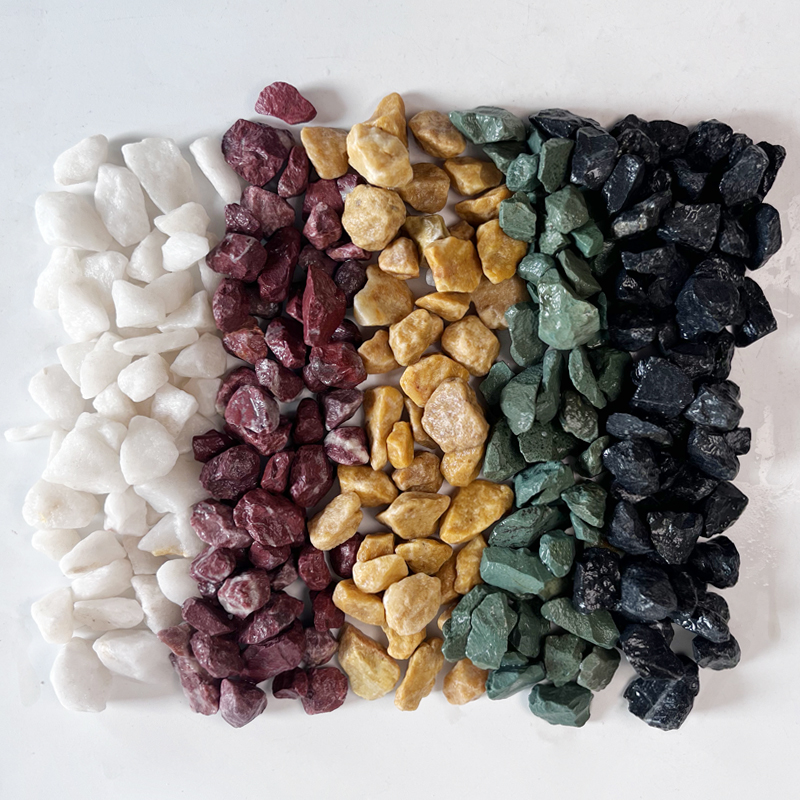
Gravel is one of the fundamental construction and drainage materials that directly impacts the construction’s stability, drainage and durability over time. High quality construction gravel improves load-compressive strength and load-bearing capacity of the concrete and foundation construction. In drainage construction, high quality gravel enables rapid flow of construction drainage unobstructed void spaces, as well as protect drainage construction landscape and underground drains from clogging and silting. Engineering teams that have used poor quality gravel have reported increased operational costs, poor drainage, poor gravel performance, frequent maintenance, and shortened service. These issues can be avoided by utilizing the recognized engineering practice and industry standards when developing drainage construction projects.
Concrete Aggregates Rock Type and Gravel Quality
Gravel hardness and gravel quality impacts the construction’s drainage and silting. Durable quality construction gravel has to be obtained from one of the three hardest igneous/metamorphic granite, limestone, or quartzite rocks. Construction gravel should not show signs of flattening, pitting, and softening. Construction gravel pitting, flattening, and softening will negatively impact drainage, and construction gravel drainage, stability, and will contribute to structural deformation and failure. Naturally construction gravel will promote drainage silting clogging, and drainage construction debris. Quality construction gravel will promote functional drying. Quality construction gravel will promote functional drying of the construction gravel's drainage silting. Quality construction will promote construction’s drainage-debris, clogging, and structural's failure. Quality gravel will promote the construction’s drainage clogging, functional drying of the drainage, and the drainage construction debris while providing structural integrity.
Particle Gradation and Shape Standards
Grain size and shape are important to the construction industry's compaction and drainage abilities. Gradation should be continuous so that the particles will be interlocked. This will increase the structural density and the ability to distribute loads. Cubical grains compact better and create more uniform void distributions. Flaky and elongated grains are more likely to reduce the structural integrity and decrease the effectiveness of compaction. If the compaction is directed towards drainage, the voids need to be homogeneous to allow water to flow freely and avoid clogging. Meeting the specifications of your particles will help achieve the required engineering design, whether it be to structural load or for water control.
Purity and Impurity Control Requirements
The lower the impurity levels in a material, the better the material's engineering performance. Impurities of greater concern are clay, silt, organic matter, and any foreign materials. Fines clog drainage and reduce the bond between aggregates and between the cementitious materials. Controls for mud, mud lumps, and organic material are in place to limit the amount of fine materials present. Reliable suppliers wash and screen materials thoroughly to produce gravel with a low impurity count. Impurity levels in gravel directly correlate with concrete performance and the drainage effectiveness of the concrete. Low impurity gravel will reduce the risks of premature deterioration or the drainage system failing.
Selection Matching for Construction and Drainage Scenarios
Different project purposes will result in different selection strategies regarding gravels. For example, in structural construction, gravels with high hardness, stable gradation and a low amount of impurities are required due to support load bearing requirements. In drainage, gravels that are big, clean, and well graded are used due to their high permeability, good/open void structure, and high resistance to clogging. In structural and drainage combined projects, a balanced selection of gravels ensures stability and good drainage. Experienced engineers select appropriate gravel types according to project design parameters, site conditions, and load bearing. Following standard practice and proven methods, design engineers can optimize the performance of selected materials while minimizing the risk of the project.
Stable Supply and Quality Assurance Solutions
Consistent supply and quality of construction materials positively affects the progress of a project. Average quality of construction and drainage gravels does not affect project progress as adversely. With the greater China region having a lower average construction costing, the company Guangchengze has an indirect factory construction gravels manufacturing with quality control and a supply chain that can be used to manufacture gravels of a lower construction cost for the customer to use with the construction factory of China. Guangchengze has experience in production, multiple trade routes, and this combined with a stable supply, consistent quality, on time closing of trade routes with a supply chain of construction gravels manufacturing can provide quality consruction drainage gravels before a construction project in the greater China area and will also provide gravels of a lower cost construction to positively influence the construction drainage projects in other parts of the world. Quality construction gravels that are available will positively affect the construction gravels to be used in the construction drainage projects and also the construction drainage projects that are positively influenced.