 EN
EN


Beating the Midsummer Heat with Gravel Paving: A Garden Cooling Renovation Case Study
I. Introduction: Say Goodbye to Scorching Summer Courtyards
During the heat of summer, many courtyards face a troublesome issue: concrete surfaces and asphalt paths retain heat, causing midday ground temperatures to skyrocket. This makes walking barefoot impossible and renders outdoor relaxation areas completely unusable. Meanwhile, lawns wither under the intense sun, requiring frequent watering and maintenance—a process that is not only time-consuming and labor-intensive but also significantly increases upkeep costs.
Traditional solutions like shade canopies or greenery offer limited cooling effects and fail to address the root cause of ground heat retention. In contemporary international landscape design, however, paving with landscape gravel has emerged as a favorite for courtyard renovations, thanks to its natural cooling properties, high permeability, low maintenance requirements, and aesthetic appeal.
Today, we share a real-life client renovation case study detailing how to use landscape gravel to create a cooler summer courtyard. We also provide a comprehensive installation guide—perfect for anyone looking to renovate their private courtyard, villa garden, or outdoor terrace.
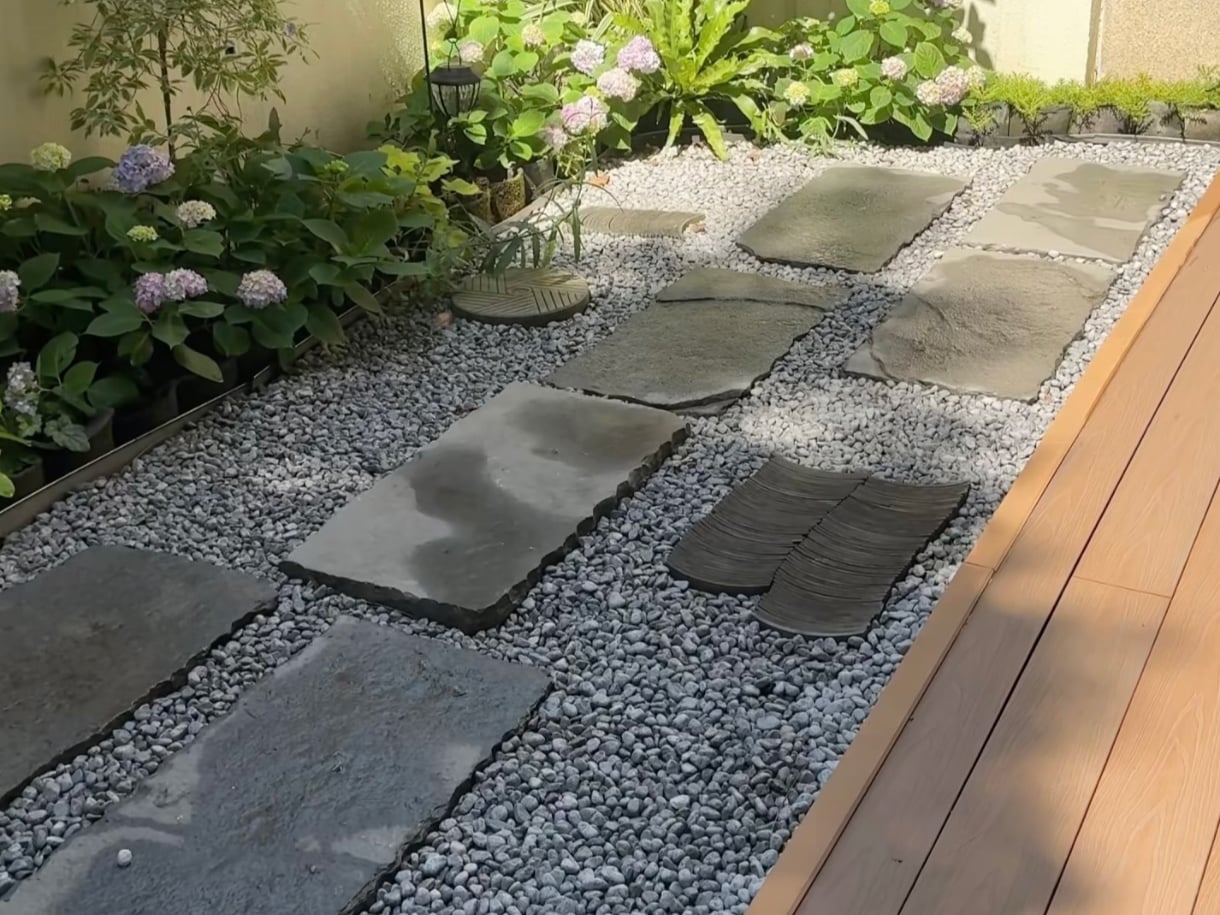
II. Real-World Renovation Case Study: Cooling Upgrade for a California Homeowner's Patio
The homeowner in this case resides in Los Angeles, California. Her patio covers an area of approximately 20 square meters; prior to the renovation, the surface consisted of traditional concrete, which suffered from severe heat retention issues every summer.
The homeowner reported: "In previous years, at high noon during midsummer, the concrete surface would become scorching hot. My children couldn't play barefoot, and the outdoor dining table was unusable. I tried installing shade sails and planting plenty of greenery to cool the area, but the cooling effect was short-lived, and the cost of maintaining the plants during summer was extremely high."
Upon the recommendation of a professional landscape designer, the homeowner decided to replace the traditional concrete surface. She opted for a complete renovation of the patio and garden walkways using light-colored pebbles and mixed decorative gravel, effectively addressing the root cause of the high surface temperatures.
Measured Cooling Results:
We measured surface temperatures at 2:00 PM on a midsummer day with an ambient temperature of 35℃. The difference before and after the renovation was striking: the original concrete surface reached 53℃–56℃, retaining intense heat that lingered long after sunset, whereas the landscaped gravel surface measured 30℃–33℃. The overall surface temperature dropped by nearly 23℃, completely resolving the issue of the scorching patio. The homeowner expressed great satisfaction: "After the renovation, the patio remained cool and comfortable all summer long. We could walk barefoot and dine outdoors even at noon. Additionally, the new surface reduced soil moisture evaporation, cutting our watering frequency in half and making patio maintenance incredibly easy."
III.Why are gravel surfaces better than concrete for cooling a courtyard in summer?
Concrete and asphalt are dense, solid materials that absorb heat quickly and dissipate it slowly, creating a "courtyard heat island effect." They store heat during the day under intense sun and continue to release it at night, raising the overall temperature of the courtyard. In contrast, landscape gravel offers natural cooling advantages:
1. High reflectivity and low heat absorption
Light-colored natural gravel effectively reflects sunlight and significantly reduces heat absorption—unlike dark concrete, which absorbs heat readily—thereby minimizing heat accumulation at the surface.
2. Breathable gaps and natural evaporative cooling
The gaps between the stones provide excellent breathability, allowing rainwater and subsurface moisture to evaporate slowly. This creates a natural microclimate cooling effect, effectively giving the courtyard its own "natural air conditioning."
3. Low heat storage and rapid heat dissipation
Natural landscape gravel has low heat capacity; it does not store large amounts of heat after exposure to the sun and dissipates heat quickly at sunset, eliminating the problem of the courtyard remaining stiflingly hot throughout the night.
IV. Key Advantages of Our Cooling Landscape Gravel
Designed to meet the needs of summer courtyard cooling and outdoor landscape surfacing, our landscape gravel is meticulously selected and custom-engineered for outdoor settings—setting it apart from ordinary crushed stone with these standout advantages:
1. Light-Colored Palettes for Maximum Cooling
Featuring light tones such as off-white, light gray, beige, and ivory, these stones offer excellent light reflectivity and superior cooling performance. They complement various courtyard styles, offering a look that is minimalist, sophisticated, versatile, and timeless.
2. Uniform Particle Size for Excellent Breathability and Drainage
Consistent, uniform particle sizes create even gaps that facilitate airflow, drainage, and evaporative cooling. This prevents water pooling and mud splashing after rain, keeping the courtyard clean and tidy.
3. Weed Suppression and Durability for Low Maintenance
When installed with a weed barrier fabric, the gravel effectively inhibits weed growth, eliminating the problem of rampant summer weeds and reducing the need for frequent maintenance. It is heat-resistant, colorfast, and crack-resistant, offering a lifespan of over 10 years outdoors.
4. Comprehensive Range of Specifications for Diverse Applications
Available in small consumer packs suitable for residential courtyards, walkways, and flowerbeds, as well as in bulk quantities for villa gardens, landscaping projects, and outdoor site renovations.
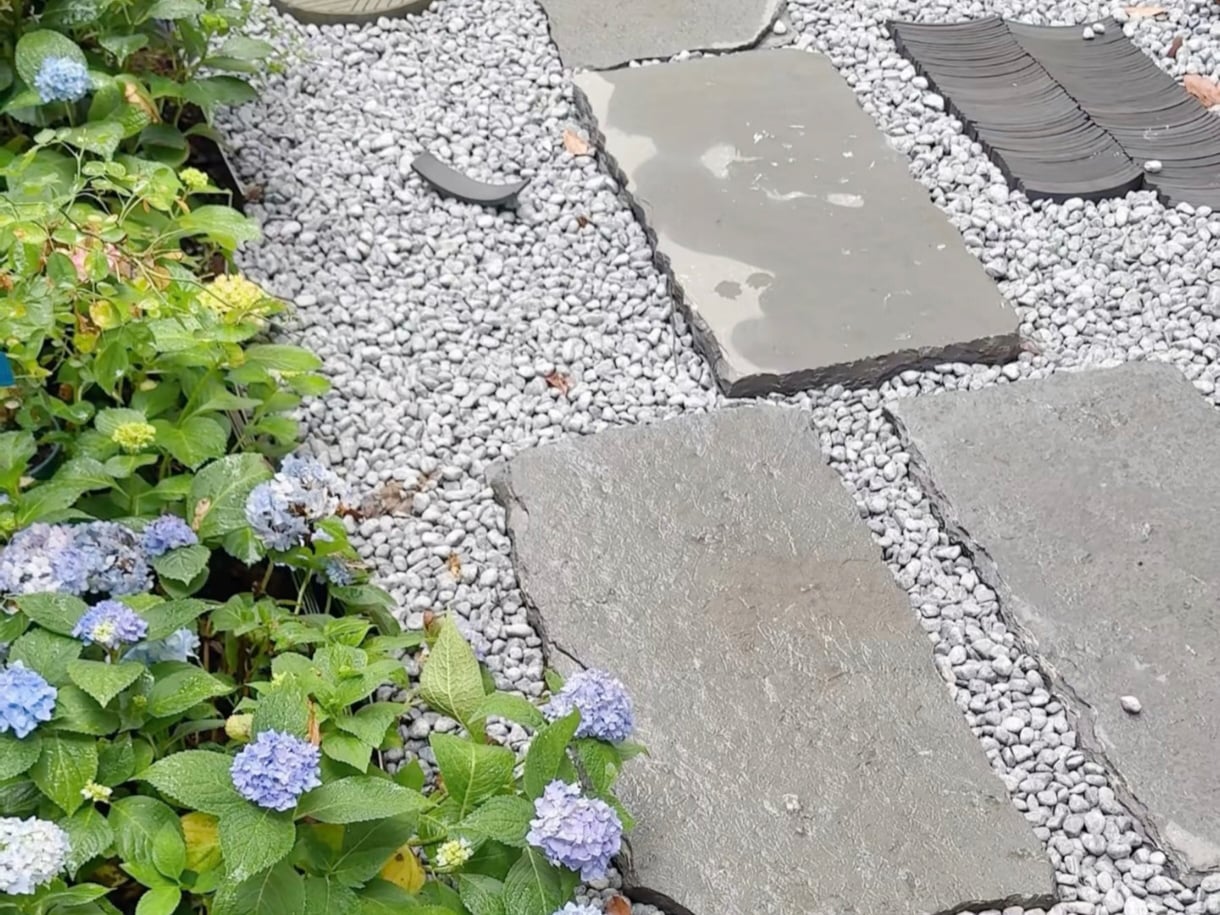
V. DIY Guide to Installing a Cooling Gravel Garden Path
To create a cooling, durable, and attractive gravel garden path, follow these standard steps—even beginners can easily handle the process:
Step 1: Clear and Level the Ground
Remove existing weeds, dead branches, and old concrete fragments. Level the soil and lay a 5–8 cm base layer of coarse sand; this enhances underground water retention and evaporative cooling while ensuring a flat, stable surface.
Step 2: Lay Weed-Blocking, Breathable Fabric
Install a breathable weed-control fabric over the sand layer. This blocks weed growth without impeding drainage or airflow, prevents heat from rising from the soil, and further optimizes the cooling effect.
Step 3: Select Cooling-Friendly Gravel
For sunny areas, prioritize light-colored gravel to maximize sunlight reflection and lower temperatures. In shaded areas, you can incorporate small amounts of dark gravel for decorative accents, balancing aesthetics with practicality.
Step 4: Spread Gravel Evenly and Compact Lightly
Spread an 8–10 cm layer of landscape gravel evenly and compact it gently to ensure a flat, walkable surface while maintaining gaps between stones to allow for airflow and drainage.
Step 5: Incorporate Plants to Enhance Cooling
Line the path edges with drought-tolerant plants such as lavender, ornamental grasses, or ferns, and plant shade trees in the corners. This blend of hardscaping and greenery further lowers the overall ambient temperature of the garden.
VI. Additional Tips for Cooling Your Stone-Paved Courtyard
Pairing stone pathways with vine-covered pergolas blocks direct midday sunlight, providing dual insulation and doubling the cooling effect;
Placing a small decorative fountain on the stone patio allows water vapor to combine with the natural evaporation from the stones, optimizing the courtyard's microclimate;
Avoid using dark-colored surfacing materials, as their heat-absorbing properties could negate the cooling benefits provided by the stones.
VII. Customer Testimonial
"Every summer, I used to be bothered by a scorching-hot courtyard. After renovating with landscaping stones, the heat issue was completely resolved, the courtyard looks much more attractive, and maintenance is incredibly easy. I’ve already recommended this to neighbors and friends who are renovating their own courtyards!" — Homeowner, California Courtyard Renovation Project
