Product Name: White Zeolite
Brand: GCZ
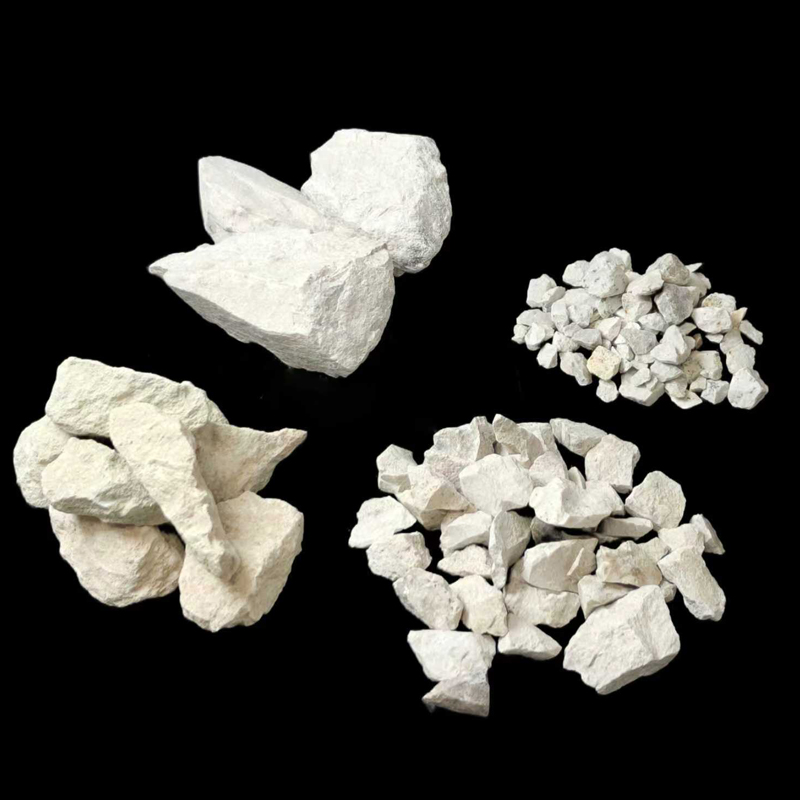
Size: 1-3mm, 3-6mm, 6-10mm, 1-3cm, 3-5cm
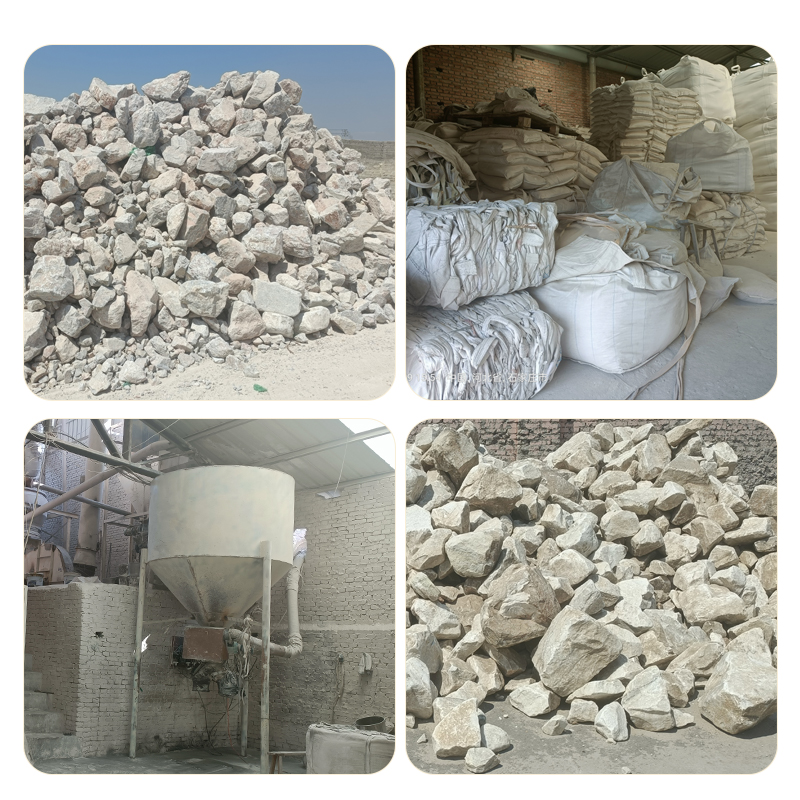
Packaging: Ton bags / Woven bags / Customized
Logo: Customizable
Samples: Available
Minimum Order Quantity (MOQ): ≥ 500 kg
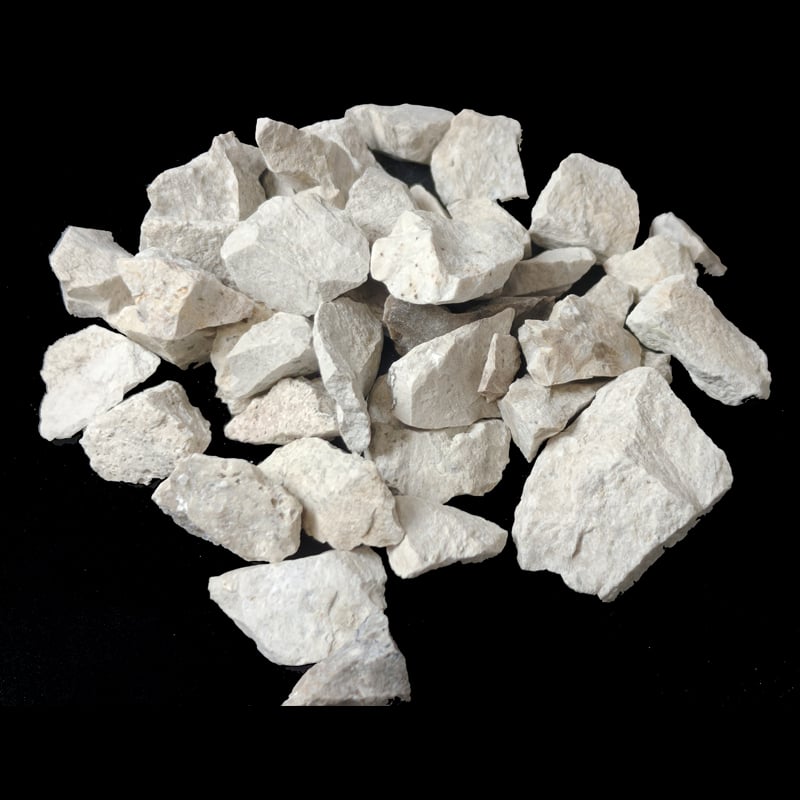
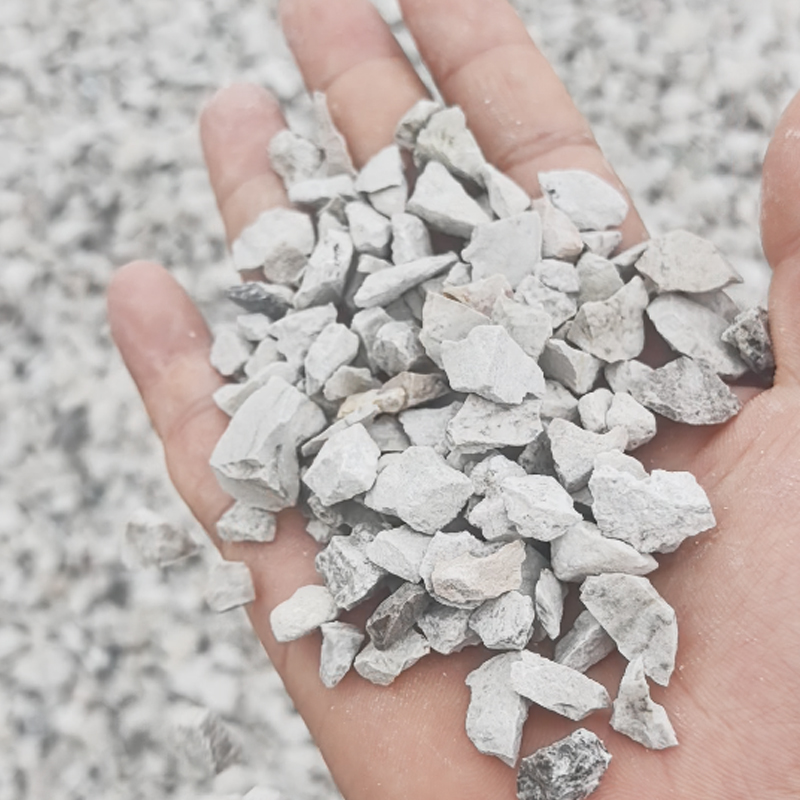
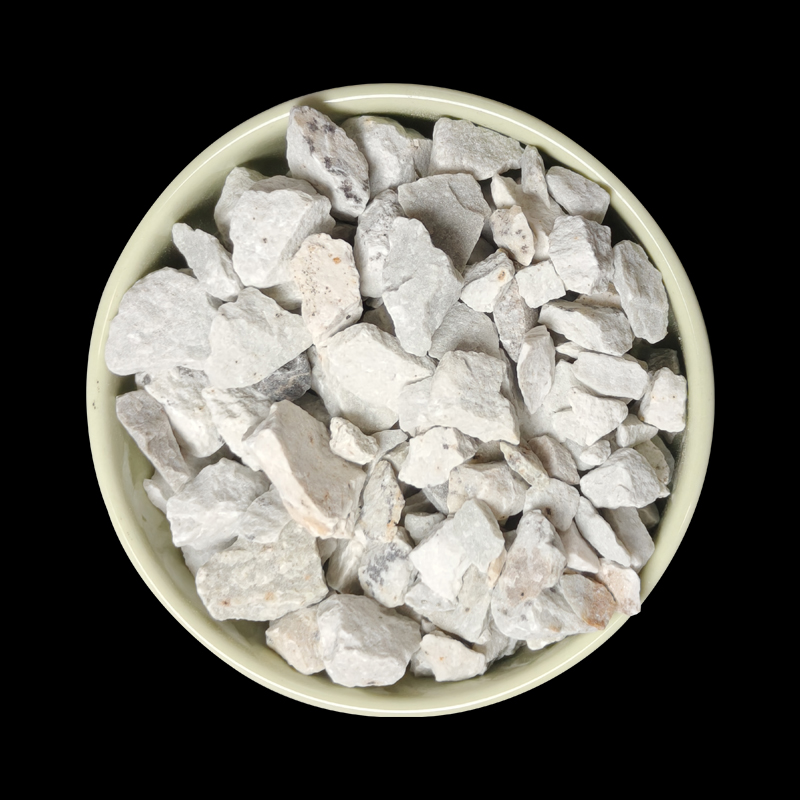
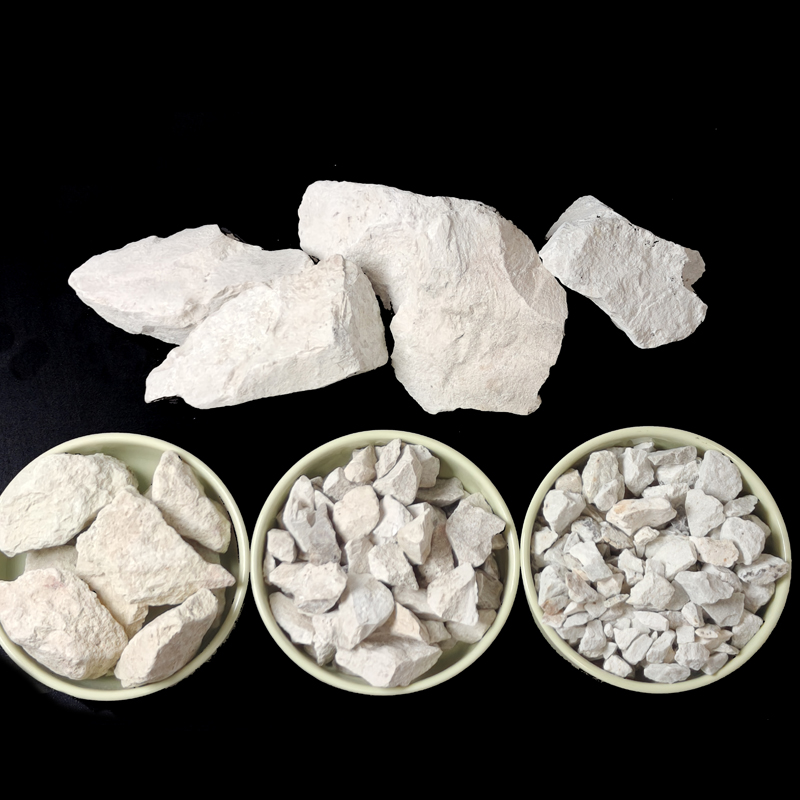
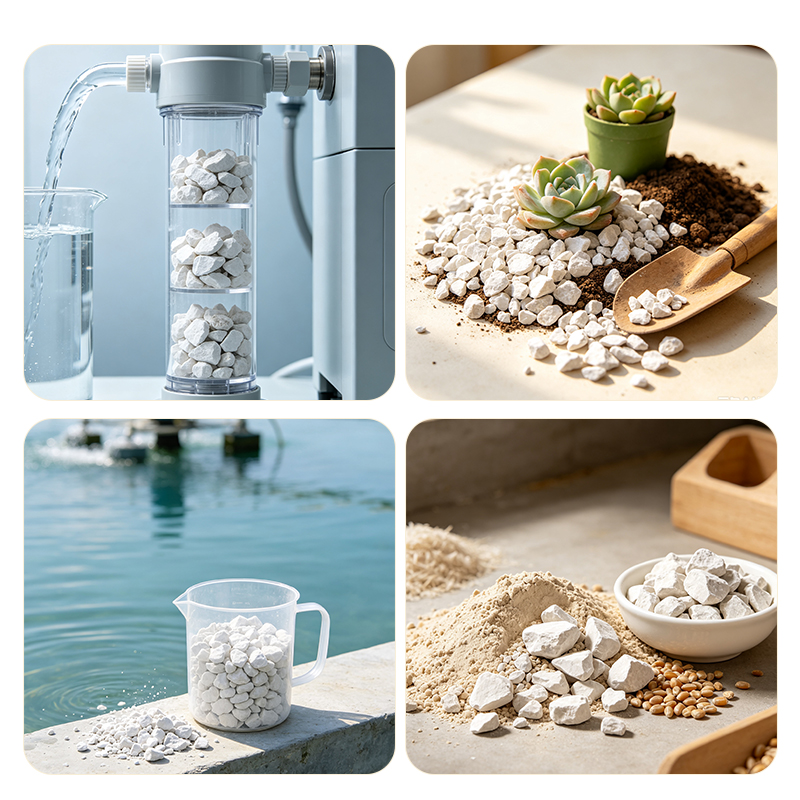
Produced by crushing and screening raw natural white zeolite ore, this product consists of irregular, light grayish-white granules featuring high porosity and a well-developed internal honeycomb-like microporous structure. It is washed to remove impurities and graded by size; the material is free of dust and hard clumps, lightweight, and porous, offering excellent adsorption and ion-exchange capabilities. Available in various particle sizes, it serves as a multifunctional, eco-friendly filter medium and horticultural substrate.
| Specification | Value |
|---|---|
| Product Name | White Zeolite |
| Brand | GCZ |
| Size | 1-3mm, 3-6mm, 6-10mm, 1-3cm, 3-5cm |
| Packaging | Ton bags / Woven bags / Customized |
| Logo | Customizable |
| Samples | Available |
| Minimum Order Quantity | ≥500 kg |
Highly Porous with Superior Adsorption: Features a dense network of honeycomb-like micropores that effectively adsorb odors, ammonia-nitrogen, and heavy metals, rapidly capturing harmful substances from water and soil.
Exceptional Ion Exchange Capacity: A natural aluminosilicate mineral that stabilizes water quality and soil pH, slowly releases trace elements, and improves soil structure.
Lightweight, Breathable, and Non-Compacting: Lightweight and loose in texture; when mixed with soil, it prevents compaction and waterlogging (which causes root rot) and remains durable over time without crumbling or caking.
Stable, Durable, and Chemically Inert: Resistant to acids and alkalis; does not easily decompose or weather. It remains intact during prolonged submersion and functions reliably in both wet and dry environments.
Horticulture and Gardening: Soil amendment for succulents, orchids, bonsai, and houseplants; loosens soil while ensuring moisture retention and breathability. Used as a top dressing to suppress odors, adsorb ammonia, prevent root rot, and improve compacted soil.
Aquarium Filtration Media: Filter filling for fish tanks, ponds, and turtle tanks; adsorbs ammonia-nitrogen, fishy odors, and impurities; stabilizes water quality and reduces the frequency of water changes.
Wastewater and Water Purification: Filtration for industrial wastewater, aquaculture effluent, and landscape ponds; traps suspended solids, adsorbs heavy metals and harmful ammonia-nitrogen, and purifies the water.
Aquaculture Industry: Pond-bottom substrate for fish and shrimp farming; improves bottom soil quality, breaks down odors from waste, balances water pH, and reduces aquatic diseases.
1. What is white zeolite made of? Is it synthetic?
It is produced by crushing and screening natural zeolite ore. It is an aluminosilicate mineral—free from chemical synthesis or harmful additives—making it a natural, eco-friendly, and safe choice.
2. What are the benefits of mixing zeolite into soil? Which plants is it suitable for?
It loosens the soil, improves aeration (preventing waterlogging and root rot), absorbs ammonia odors, and slowly releases trace elements. It is suitable for succulents, orchids, bonsai, houseplants, and seedling propagation.
3. Can zeolite be used as a top dressing for potted plants?
Yes. It covers the soil, inhibits pest breeding, absorbs odors, and provides a clean, aesthetic finish.
4. What are the benefits of using zeolite in an aquarium? Does it alter water quality?
It powerfully adsorbs ammonia-nitrogen, fish waste odors, and impurities; stabilizes pH levels; clears cloudy water; and reduces the frequency of water changes.
5. What is the effect of using zeolite in aquaculture ponds?
It improves pond-bottom sludge, breaks down fish and shrimp waste, lowers ammonia-nitrogen levels, reduces aquatic diseases, and stabilizes the aquaculture environment.
6. Can it be used as filter media for wastewater treatment?
Yes, it is suitable for landscape ponds, aquaculture wastewater, and small-scale industrial sewage treatment. It traps impurities and adsorbs heavy metals, offering stable filtration performance.
7. Is it prone to breaking during transport? Do broken particles affect its use?
Packaging includes protective cushioning; a small amount of fine powder is normal (residual from screening). Small, broken particles can be mixed into soil or used in small filters, so nothing goes to waste.

Building 3, Block H, Poly Garden, Chang'an District, Shijiazhuang City, Hebei Province
Copyright © 2026 by Hebei Guangchengze Import And Export Trading Co., Ltd. | Privacy policy
 EN
EN